In the world of education, science is in fashion.
When people debate policy you don’t often hear them say “everyone knows that thus and so is true” but you frequently hear them say “the data indicate . . .”
Although Americans are boosters of the scientific method, we are missing an essential component of a coherent scientific research program of education — a definition of our goals for schooling. Without that, science applied to education will be inefficient at best, and more likely will be misleading because education research will be guided not by the goals set for the field but more likely by expedience.
If that happens — and it may already be happening — we all get a warped view of what schooling is and of which outcomes of education are important.
more...
Tuesday, January 06, 2009

Monday, January 05, 2009
Sunday, December 28, 2008
Bringing the Power of Education to Children around the World
Room to Read's John Wood:
After a trek in the Himalayas brought him face-to-face with extreme poverty and illiteracy, John Wood left his position as a director of business development at Microsoft to found Room to Read, an award-winning international education organization.
Under his leadership, more than 1.7 million children in the developing world now have access to enhanced educational opportunities. Room to Read to date has opened 725 schools and 7,000 bilingual libraries, and funded more than 7,000 scholarships for girls. Wood talked with Knowledge@Wharton about the launch of Room to Read, the book he wrote called Leaving Microsoft to Change the World and his personal definition of success.
http://adjix.com/hrvn
After a trek in the Himalayas brought him face-to-face with extreme poverty and illiteracy, John Wood left his position as a director of business development at Microsoft to found Room to Read, an award-winning international education organization.
Under his leadership, more than 1.7 million children in the developing world now have access to enhanced educational opportunities. Room to Read to date has opened 725 schools and 7,000 bilingual libraries, and funded more than 7,000 scholarships for girls. Wood talked with Knowledge@Wharton about the launch of Room to Read, the book he wrote called Leaving Microsoft to Change the World and his personal definition of success.
http://adjix.com/hrvn
Friday, December 26, 2008
Global Learning Objects Brokered Exchange: GLOBE
A search engine for online learning resources.
http://adjix.com/46up
http://adjix.com/46up
Tuesday, December 23, 2008
Saturday, December 20, 2008
Sunday, December 14, 2008
Monday, December 08, 2008

Read more
plus lesson plans and classroom resources
plus how to get the book for free
Wednesday, December 03, 2008
dreams
"Nothing is as real as a dream. The world can change around you, but your dream will not. Responsibilities need not erase it. Duties need not obscure it. Because the dream is within you, no one can take it away."
Tom Clancy
Tom Clancy
Sunday, November 30, 2008
AccessED
AccessED
http://educationau.edu.au/jahia/Jahia/pid/573
accessED is a tool that allows you to test your website, intranet or learning management system content for conformance to W3C accessibility guidelines. More information and links to the toolbar can be found through the education.au website.
http://educationau.edu.au/jahia/Jahia/pid/573
accessED is a tool that allows you to test your website, intranet or learning management system content for conformance to W3C accessibility guidelines. More information and links to the toolbar can be found through the education.au website.
Thursday, November 27, 2008
Bananas in Pyjamas
Bananas in pyjamas
http://www.abc.net.au/children/bananas/default.htm
From the ABC, this website has a collection of interactive games, stories, music, and craft projects related to the Bananas in Pyjamas. Songtime is at http://www.abc.net.au/children/bananas/games/songtime/default.htm Children can select the musician and musical instrument for each section of the song then at the end, it is all played together.
http://www.abc.net.au/children/bananas/default.htm
From the ABC, this website has a collection of interactive games, stories, music, and craft projects related to the Bananas in Pyjamas. Songtime is at http://www.abc.net.au/children/bananas/games/songtime/default.htm Children can select the musician and musical instrument for each section of the song then at the end, it is all played together.
Friday, November 21, 2008
Charter on primary schooling
The Charter on Primary Schooling sets out the Australian Primary Principals Association's views on the nature and purposes of primary schooling in Australia. It aims to be a foundational document during policy deliberations about the role of primary schools, their curriculum and the level of support that they require to achieve high standards. The core learning areas are presented as: English literacy, Mathematics (including numeracy), Science, and Social Education.
http://www.appa.asn.au/cms/uploads/news/charter20071001.pdf
Tuesday, November 18, 2008
Fair trade for all education kit
http://adjix.com/3eb
This resource is suitable for students aged 10 - 13 years of age and covers topics such as world trade, coffee trade, cocoa trade and sweatshops.
This resource is suitable for students aged 10 - 13 years of age and covers topics such as world trade, coffee trade, cocoa trade and sweatshops.
Sunday, November 16, 2008


Friday, November 14, 2008
Discovery Channel - Space
http://www.discoverychannel.com.au/space/index.shtml
This website has a collection of information on outer space. Including an interactive game, information on our solar system, space exploration and comets, meteors and asteroids.
This website has a collection of information on outer space. Including an interactive game, information on our solar system, space exploration and comets, meteors and asteroids.
Monday, November 10, 2008
Quotation for the Day - Who dares to teach
"Who dares to teach must never cease to learn." -- John Cotton Dana
Thursday, November 06, 2008
Unruly pupils to get foot massage
Disruptive pupils are to be given foot massages in a bid to curb their unruly behaviour.
Lambeth Council in south London is to spend £90,000 next year on sending reflexologists into schools.
The team is from Bud-Umbrella, a London-based charity which offers complementary therapies to adults and children.
http://www.metro.co.uk/weird/article.html?Unruly_pupils_to_get_foot_massage&in_article_id=386587&in_page_id=2
Lambeth Council in south London is to spend £90,000 next year on sending reflexologists into schools.
The team is from Bud-Umbrella, a London-based charity which offers complementary therapies to adults and children.
http://www.metro.co.uk/weird/article.html?Unruly_pupils_to_get_foot_massage&in_article_id=386587&in_page_id=2
Saturday, November 01, 2008
Baby Karaoke
http://www.abc.net.au/parents/baby_karaoke/
This ABC site provides simple songs for singing to young children. The songs are provided as animations with sound, and subtitled with words highlighted as they are sung. So they can be used as a reading exercise as well.
This ABC site provides simple songs for singing to young children. The songs are provided as animations with sound, and subtitled with words highlighted as they are sung. So they can be used as a reading exercise as well.
Wednesday, October 29, 2008
Planets - acrostic poem
research project on the planets with second graders ... . The end product was an acrostic poem on one of the planets... a webquest format for their research ... : it's here online
Friday, October 24, 2008
Debunking the Myth about Girls and Math
The myth that girls aren’t good at math must be put to rest—otherwise it will become a self-fulfilling prophecy, says a new report.
Many people still hold the belief that females intrinsically have less aptitude than males to excel in math at the very highest levels. Even former Harvard University President Lawrence Summers gave credence to this notion in 2005, suggesting that it might explain the shortage of women mathematicians among the tenured faculty of elite American research universities. more » » »
Many people still hold the belief that females intrinsically have less aptitude than males to excel in math at the very highest levels. Even former Harvard University President Lawrence Summers gave credence to this notion in 2005, suggesting that it might explain the shortage of women mathematicians among the tenured faculty of elite American research universities. more » » »
Wednesday, October 22, 2008
Philly Event to Consider News Literacy
As Americans continue to lose faith in the fourth estate, Temple University’s Media Education Lab hopes to bring some thoughtful engagement to the topic—especially for those who work with our youngest citizens.For three days this week, Oct. 23–25, educators, journalists, researchers, and all those interested are invited to Philadelphia for “Rebooting the News: Reconsidering an Agenda for American Civic Education.” The goal? To finds ways to bring young people back into a civic mindset—helping them learn how to navigate the news in ways that make them feel more connected to their world. read more...
Tuesday, October 21, 2008
Patnership Lists Geography as a Critical 21st Century skill
[Via mywonderfulworld]
A report from the Partnership for 21st Century Skills addresses the need for new competencies among American students, highlighting geography and geographic themes such as global awareness, social and cross-cultural skills, and civic literacy. The Partnership proposes a solution with (surprise, surprise) educational reform.
A report from the Partnership for 21st Century Skills addresses the need for new competencies among American students, highlighting geography and geographic themes such as global awareness, social and cross-cultural skills, and civic literacy. The Partnership proposes a solution with (surprise, surprise) educational reform.
Monday, October 20, 2008
Friday, October 17, 2008
Resources for Halloween
Looking for lesson plans and resources for Halloween? I've just put together a page for you. You can check it out here. http://www.consultpivotal.om/halloween_teachers.htm
The is also a list of books and poems to share, and a page of activities to support fiction about Halloween.
Follow the links from those pages for ideas for costumes, parties, craft activities and colouring pages.
The is also a list of books and poems to share, and a page of activities to support fiction about Halloween.
Follow the links from those pages for ideas for costumes, parties, craft activities and colouring pages.
Thursday, October 16, 2008
Simple science
Middle-school science teachers have a new resource at their disposal: SIMPLE Science, an online collection of science activities created by Tucson, Ariz.-based education company Science Approach with funding from the National Science Foundation.
SIMPLE Science lets students explore X-rays of animal skeletons, measure snow and ice cover over time, explore bipedal locomotion, manipulate photographs, diagnose lung disease, and much more. Each topic can be covered in a 50-minute class session.
The site is free and is available to anyone with high-speed internet access and a Java-enabled browser.
The site's goal is to help overcome barriers to the use of image processing and analysis in K-12 classrooms by giving educators access to extensive, updatable archives of imaging data, while designing a pedagogical structure that helps teachers use imaging data in a way that supports middle-school science standards.
SIMPLE Science consists of a three-tired structure that scaffolds students’ use of image processing and analysis, from basic explorations of how imaging is used in various fields of science, to lessons developed from an archive of images and data housed on the site's server.
SIMPLE Science lets students explore X-rays of animal skeletons, measure snow and ice cover over time, explore bipedal locomotion, manipulate photographs, diagnose lung disease, and much more. Each topic can be covered in a 50-minute class session.
The site is free and is available to anyone with high-speed internet access and a Java-enabled browser.
The site's goal is to help overcome barriers to the use of image processing and analysis in K-12 classrooms by giving educators access to extensive, updatable archives of imaging data, while designing a pedagogical structure that helps teachers use imaging data in a way that supports middle-school science standards.
SIMPLE Science consists of a three-tired structure that scaffolds students’ use of image processing and analysis, from basic explorations of how imaging is used in various fields of science, to lessons developed from an archive of images and data housed on the site's server.
Monday, October 13, 2008
Quote for the week
A man who has never gone to school may steal from a freight car;
but if he has a university education, he may steal the whole railroad.
-- Theodore Roosevelt
Sunday, October 12, 2008
GIS and Geographic Inquiry
"Geospatial" technologies--which include geographic information system (GIS), global positioning system (GPS), and remote sensing (RS) tools--are becoming increasingly important in our everyday lives. These technologies use "smart" maps that can display, query, and analyze geographic databases; receivers that provide location and navigation; and global-to-local imagery and tools that provide context and analysis.
More here ...
More here ...
Tuesday, October 07, 2008
Reale Books
RealeBooks (“Really Books”) are picture books created with RealeWriter (“Really Writer”) software. (which is free).
You can read RealeBooks in your web browser or download them with RealeWriter to print or modify.
RealeLibraries (“Really Libraries”) are websites where schools, organizations, and businesses share their RealeBooks.
You can read RealeBooks in your web browser or download them with RealeWriter to print or modify.
RealeLibraries (“Really Libraries”) are websites where schools, organizations, and businesses share their RealeBooks.
Wednesday, October 01, 2008
2 fruits and 5 vegetables - Kids only
http://www.gofor2and5.com.au/article.aspx?c=7&a=136&n=1
This website outlines the benefits of fruit and vegetables, suggests ways of increasing fruit and vegetable intake and provides easy recipes. The Kids Only section provides activities designated lower primary, middle primary, and upper primary.
Multimedia / Video Tools
From data projectors and digital video to interactive whiteboards, educators today have a wide array of multimedia presentation tools at their disposal to enhance visual instruction--allowing them to share ideas, information, charts, images, animations, audio, and video more effectively.
... more
... more
Friday, September 26, 2008
Video - 21st Century Decision-Making
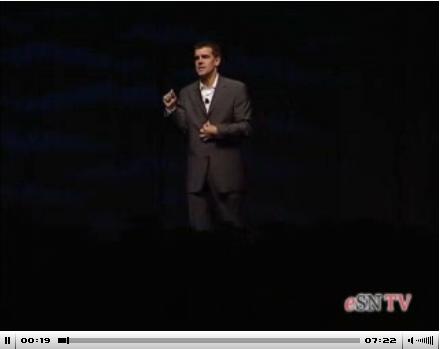 Author James Surowiecki explains how the decision-making ability of a diverse group of people is more effective than that of individuals.
Tuesday, September 23, 2008
Video - Online Safety - "Growing up online"

[From ITmadesimple.com]
"a must watch for all teachers, parents and anyone involved with students or children going online. The video was released in the US on the PBS network as part of the Frontline program. Growing Up Online explores a large number of issues about students growing up online and the challenges that everyone face from parents to teachers and most importantly students.
There are teacher notes and these should be useful, the website as a whole has lots of information and links and provides a lot of good useful information. It is important to note that the show does focus on the negative side of going online, and that anyone using or showing clips need to ensure audiences know that going online has a lot of advantages and positives - we just need to get a balance and educate our children and their parents and teachers."
Watch the video
Teacher's Guide
Wednesday, September 03, 2008
Typing Games
http://www.freetypinggame.net/play.asp
A collection of interactive free online typing games for beginner touch typists.
Thursday, August 07, 2008
Food time line
Via Gary Price's Resourceshelf:
The Food Timeline <http://www.foodtimeline.org/>
Ever wonder what foods the Vikings ate when they set off to explore the new world? How Thomas Jefferson made his ice cream?
What the pioneers cooked along the Oregon Trail? Who invented the potato chip,and why?
Welcome to the Food Timeline! Food history presents a fascinating buffet of popular lore and contradictory facts. Some people will tell you it's impossible to express this topic in exact timeline format. They are correct. Most foods we eat are not invented; they evolve.
This site is the work of Lynne Olver, "(a) reference librarian with apassion for food history."
There is a section of this site that covers Historic Food Prices. Seems like somebody always wants to know what a gallon of milk cost Back In The Day <http://digbig.com/4xfxq>(PDF; 2.2 MB; scroll downto page 31). Some data from other countries can be found here as well.
The Food Timeline <http://www.foodtimeline.org/>
Ever wonder what foods the Vikings ate when they set off to explore the new world? How Thomas Jefferson made his ice cream?
What the pioneers cooked along the Oregon Trail? Who invented the potato chip,and why?
Welcome to the Food Timeline! Food history presents a fascinating buffet of popular lore and contradictory facts. Some people will tell you it's impossible to express this topic in exact timeline format. They are correct. Most foods we eat are not invented; they evolve.
This site is the work of Lynne Olver, "(a) reference librarian with apassion for food history."
There is a section of this site that covers Historic Food Prices. Seems like somebody always wants to know what a gallon of milk cost Back In The Day <http://digbig.com/4xfxq>(PDF; 2.2 MB; scroll downto page 31). Some data from other countries can be found here as well.
Tuesday, July 22, 2008

Saturday, July 12, 2008
List of Films Based on Poems - Wikipedia
http://en.wikipedia.org/wiki/List_of_films_based_on_poems
And far more of them than you would ever guess. It's not just Beowulf and Dr. Seuss books that have inspired moviemakers, but also Gunga Din, The Raven, Jabberwocky, The Cremation of Sam McGee and many others.
Wednesday, July 02, 2008
Third World Farmer
Third World Farmer is an online simulation game which gives insight into the real-world mechanisms that cause and sustain poverty in developing countries. Players have to manage issues that arise from drought and illness as they try to make ends meet on their African farm. It challenges them to think more deeply about the difficult choices that poverty and conflict necessitate. http://www.3rdworldfarmer.com
Friday, June 20, 2008
BugWise
http://www.bugwise.net.au/
The BugWise program has been designed by the Australian Museum Online to enable schools and other groups to get involved in ecological research. Here you will find out what invertebrates are, what they do, their incredible diversity and why they are vitally important to a healthy planet. The Invertebrate Guide provides a fact page with image of each insect.
The BugWise program has been designed by the Australian Museum Online to enable schools and other groups to get involved in ecological research. Here you will find out what invertebrates are, what they do, their incredible diversity and why they are vitally important to a healthy planet. The Invertebrate Guide provides a fact page with image of each insect.
Wednesday, June 11, 2008
EducaPoles: Pictures
http://www.educapoles.org/index.php?/fun_zone/pictures_galleries/&s=7&rs=14&lg=en
The International Polar Foundation provides this collection of photographs free for educational use. Included are: whales and dolphins (cetaceans), Antarctic marine biology (scientific activities), Antarctic marine biology (flora and fauna), marine mammals from Antarctica, a colony of emperor penguins, sea ice and icebergs, sailing through Antarctic ice, birds of the Antarctic and the South Atlantic, Polar scientific activities, ice coring, polar bears, types of ice, Arctic and Antarctic fauna.
The International Polar Foundation provides this collection of photographs free for educational use. Included are: whales and dolphins (cetaceans), Antarctic marine biology (scientific activities), Antarctic marine biology (flora and fauna), marine mammals from Antarctica, a colony of emperor penguins, sea ice and icebergs, sailing through Antarctic ice, birds of the Antarctic and the South Atlantic, Polar scientific activities, ice coring, polar bears, types of ice, Arctic and Antarctic fauna.
Sunday, June 01, 2008
Simple 3D Drawing [Macromedia Flash Player]
From The Scout Report, Copyright Internet Scout Project 1994-2008. http://scout.wisc.edu/
Developed by Barbara Kaskosz of the University of Rhode Island and Doug Ensley of Shippensburg University, this resource from The Mathematical Association of America's Digital Classroom Resources collection will prove quite valuable for educators and anyone with an interest in computer graphics or geometry. Through this resource, visitors will learn how to draw and rotate 3D objects via a series of short tutorials. Along the way, users will learn about the mathematics behind manipulating cubes, the geometry involved with the manipulation of cubes, and they will also get a chance to work on their own structures. Overall, it's a fine resource and it offers insights for students in several different disciplines
http://mathdl.maa.org/mathDL/3/?pa=content&sa=viewDocument&nodeId=1674
Developed by Barbara Kaskosz of the University of Rhode Island and Doug Ensley of Shippensburg University, this resource from The Mathematical Association of America's Digital Classroom Resources collection will prove quite valuable for educators and anyone with an interest in computer graphics or geometry. Through this resource, visitors will learn how to draw and rotate 3D objects via a series of short tutorials. Along the way, users will learn about the mathematics behind manipulating cubes, the geometry involved with the manipulation of cubes, and they will also get a chance to work on their own structures. Overall, it's a fine resource and it offers insights for students in several different disciplines
http://mathdl.maa.org/mathDL/3/?pa=content&sa=viewDocument&nodeId=1674
Saturday, May 31, 2008
ABS brings data to life in the classroom
The Australian Bureau of Statistics (ABS) has launched a new set of web pages designed for use by both teachers and students. Developed by the Education Services unit within the ABS, these new pages aim to assist educators to bring data and statistics to life in the classroom. The pages offer a range of learning resources, including classroom activities, games, professional development materials and specially selected ABS publications.
... more
... more
Tuesday, May 20, 2008
Project targets new teachers' tech use
National study to examine best ways to prepare new teachers to use technology
How best to prepare new teachers to use technology is the focus of new federal research
Indiana University’s School of Education is embarking on a $3.1 million study of how current and emerging technologies are being used most effectively in classrooms—and how best to prepare new teachers to use these tools.
http://www.eschoolnews.com/news/top-news/?i=50618;_hbguid=f18205f9-07a5-4617-8d7d-04b1b7df8abc
How best to prepare new teachers to use technology is the focus of new federal research
Indiana University’s School of Education is embarking on a $3.1 million study of how current and emerging technologies are being used most effectively in classrooms—and how best to prepare new teachers to use these tools.
http://www.eschoolnews.com/news/top-news/?i=50618;_hbguid=f18205f9-07a5-4617-8d7d-04b1b7df8abc
Thursday, May 08, 2008
Children's early academic and attention skills best predict school success
Children entering kindergarten with elementary math and reading skills are the most likely to do well in school later, even if they have various social and emotional problems, say US researchers who examined data from six studies of close to 36,000 preschoolers. Children's attention-related skills also mattered, the researchers found. The findings are reported on in the November issue of Developmental Psychology, published by the American Psychological Association.
Read on ...
Read on ...
Wednesday, March 12, 2008
National Geographic animal photo galleries
http://www.nationalgeographic.com/siteindex/photogallery/animals.html
This collection of photographs of animals around the world includes birds, some insects, spiders, land mammals e.g. bears and apes, reptiles, underwater animals, and some habitats.
This collection of photographs of animals around the world includes birds, some insects, spiders, land mammals e.g. bears and apes, reptiles, underwater animals, and some habitats.
Tuesday, March 11, 2008
Parents, kids don't see need for math, science skills
With lawmakers and school leaders alike stressing the importance of math, science, and technology (MST) education in preparing students for 21st-century jobs and careers, one might... Full Story
Monday, March 10, 2008
Converged Wireless
http://www.eschoolnews.com/news/showStory.cfm?ArticleID=7155
Two technology trends that have been taking place separately in K-12 and higher-education institutions across the country are now beginning to come together: (1) the proliferation of wireless networks, and (2) the convergence of voice, video, and data on a single network infrastructure.... Full Story
Sunday, March 09, 2008
Top 10 Social Skills Students Need to Succeed
Reading, writing, ‘rithmetic and… good manners? Researchers have found that 10 basic social skills such as taking turns, listening and simply being nice are just as important to children’s academic success as the subjects they study, and that students can and should be learning these skills in the classroom.
Read on ...
Read on ...
Saturday, March 08, 2008
Teachers urged to save voice with a mic
Teachers are being advised to use microphones, loudspeakers, and other techniques to save their vocal cords. A team of scientists issued the recommendations after a study... Full Story
Wednesday, March 05, 2008
Visiting the Museum: Activities to download and print out
http://www.amonline.net.au/visiting/general/activities_download.htm
This page from the Australian Museum Online presents a range of activity sheets and booklets for young children on the topics of: thylacine or Tasmanian tiger, marsupial lion, dinosaurs, frog, skull, bird, bone, fish, fairy penguin, bug with wings, freshwater habitat, mangrove habitat, scorpion. Activities include colouring in, dot-to-dot, cut out and make, make a booklet, picture spinners.
This page from the Australian Museum Online presents a range of activity sheets and booklets for young children on the topics of: thylacine or Tasmanian tiger, marsupial lion, dinosaurs, frog, skull, bird, bone, fish, fairy penguin, bug with wings, freshwater habitat, mangrove habitat, scorpion. Activities include colouring in, dot-to-dot, cut out and make, make a booklet, picture spinners.
Sunday, March 02, 2008
My Wonderful World
[Macromedia Flash Player] From The Scout Report, Copyright Internet Scout Project 1994-2007. http://scout.wisc.edu/
http://www.mywonderfulworld.org/
National Geographic has been keeping tabs on the geographic literacy of Americans young and old for decades.
Some of their findings are a bit depressing, but they've always believed in well-thought out outreach programs, and this website is just one such program. The "My Wonderful World" site is intended for young people, but anyone will benefit from the numerous interactive activities, quizzes, and such offered here.
Visitors can start by taking the National Geographic Roper Survey, and then take a look through the "Games & Cool Stuff" area. Here, they can take a look through the world of map "mashups", learn about wayfaring, and even take an aural trip around the globe.
Additionally, there are sections designed specifically for parents, educators, and teens. Overall, it's a delight and for those yet unconverted to the importance of geography, this site will likely win over a new cadre of budding geographers.
http://www.mywonderfulworld.org/
National Geographic has been keeping tabs on the geographic literacy of Americans young and old for decades.
Some of their findings are a bit depressing, but they've always believed in well-thought out outreach programs, and this website is just one such program. The "My Wonderful World" site is intended for young people, but anyone will benefit from the numerous interactive activities, quizzes, and such offered here.
Visitors can start by taking the National Geographic Roper Survey, and then take a look through the "Games & Cool Stuff" area. Here, they can take a look through the world of map "mashups", learn about wayfaring, and even take an aural trip around the globe.
Additionally, there are sections designed specifically for parents, educators, and teens. Overall, it's a delight and for those yet unconverted to the importance of geography, this site will likely win over a new cadre of budding geographers.
Wednesday, February 27, 2008
Art Education 2.0
http://arted20.ning.com/
Craig Roland created this site for fellow travelers and art educators in order to help colleagues find out how to use new technologies in their classrooms.
First-time visitors will need to start out by signing up for a free account, and after that they are most welcome to participate in forums, groups, blogs, RSS feeds, and photo and video sharing. Some of the groups include "Art Partners", "Students of Art Education 2.0", and "First Year Art Teachers".
The forums are quite useful, and recently they have included discussions on summer research opportunities, arts censuses, and the use of streaming video in the classroom.
For art educators, this site is quite a find, and others who are interested in art and technology more generally will also find it useful.
Craig Roland created this site for fellow travelers and art educators in order to help colleagues find out how to use new technologies in their classrooms.
First-time visitors will need to start out by signing up for a free account, and after that they are most welcome to participate in forums, groups, blogs, RSS feeds, and photo and video sharing. Some of the groups include "Art Partners", "Students of Art Education 2.0", and "First Year Art Teachers".
The forums are quite useful, and recently they have included discussions on summer research opportunities, arts censuses, and the use of streaming video in the classroom.
For art educators, this site is quite a find, and others who are interested in art and technology more generally will also find it useful.
Sunday, February 24, 2008
Bouncing Balls and Geometric Series
[Real Player, Windows Media Player]
http://mathdl.maa.org/mathDL/4/pa=content&sa=viewDocument&nodeId=1550
The introduction to this intriguing exercise and article begins "If a ball bounces an infinite number of times, it must take an infinite amount of time to finish bouncing!" This piece appeared in The Journal of Online Mathematics and Its Applications in May 2007, and it was authored by Robert Styer and Morgan Besson of Villanova University. This particular article and its accompanying teaching module "explore the time and distance of a bouncing ball and leads to a study of the geometric series." Along with the actual article, this site also includes a video clip and several interactive Flash mathlets. It's a fun way to get students thinking about geometric series, and mathematics educators will definitely want to tell colleagues about the site as well
[From The Scout Report, Copyright Internet Scout Project 1994-2007. http://scout.wisc.edu/]
http://mathdl.maa.org/mathDL/4/pa=content&sa=viewDocument&nodeId=1550
The introduction to this intriguing exercise and article begins "If a ball bounces an infinite number of times, it must take an infinite amount of time to finish bouncing!" This piece appeared in The Journal of Online Mathematics and Its Applications in May 2007, and it was authored by Robert Styer and Morgan Besson of Villanova University. This particular article and its accompanying teaching module "explore the time and distance of a bouncing ball and leads to a study of the geometric series." Along with the actual article, this site also includes a video clip and several interactive Flash mathlets. It's a fun way to get students thinking about geometric series, and mathematics educators will definitely want to tell colleagues about the site as well
[From The Scout Report, Copyright Internet Scout Project 1994-2007. http://scout.wisc.edu/]
Thursday, February 21, 2008
Acting out the Water Cycle
http://www.nrw.qld.gov.au/education/teachers/water/activities/activity03.html
This activity reinforces student’s understanding of the water cycle through the use of a role play. It will reinforce the concepts of evaporation, condensation and precipitation and provides the option of introducing the concepts of run-off, transpiration and groundwater.
This activity reinforces student’s understanding of the water cycle through the use of a role play. It will reinforce the concepts of evaporation, condensation and precipitation and provides the option of introducing the concepts of run-off, transpiration and groundwater.
Monday, February 18, 2008
Artificial Boy’ to be a learning companion
‘At 17 inches tall and 6 pounds, the artificial Zeno is the culmination of five years of work by a small group of engineers, designers and programmers at Hanson Robotics. They believe... Full Story
Friday, February 15, 2008
Animals of Antarctica
http://www.teachers.ash.org.au/jmresources
A page of links to animals that live on and around the Antarctic continent.
A page of links to animals that live on and around the Antarctic continent.
Monday, February 11, 2008
Minimizing Classroom Disruptions
Computers and the internet have become welcome instructional tools in most schools, ushering a wealth of additional resources into today’s classrooms. Unfortunately, they also bring with them the potential for unwanted distractions—such as online content that ranges from off-target, to inappropriate, material.With the generous support of Faronics, a maker of solutions that help manage, simplify, and secure complex IT environments, we’ve assembled this collection of stories and columns from the eSchool News archives to help you leverage technology’s potential for education, while minimizing classroom disruptions. We hope you’ll find these resources helpful as you seek an appropriate balance in your own institutions..
Minimizing Classroom Disruptions
Minimizing Classroom Disruptions
Friday, February 08, 2008
Do schools kill creativity?

Sir Ken Robinson:
For an inspirational moment, find 20 mins of peace to view this comment on education. Sir Ken Robinson makes an entertaining (and profoundly moving) case for creating an education system that nurtures creativity, rather than undermining it. With ample anecdotes and witty asides, Robinson points out the many ways our schools fail to recognize -- much less cultivate -- the talents of many brilliant people. "We are educating people out of their creativity," Robinson says. The universality of his message is evidenced by its rampant popularity online. A typical review: "If you have not yet seen Sir Ken Robinson's TED talk, please stop whatever you're doing and watch it now."
Tuesday, February 05, 2008
NASA: Rocket Activities
[pdf]
http://exploration.grc.nasa.gov/education/rocket/TRCRocket/RocketActivitiesHome2.html
There are many things in this world that are described as not being as difficult as rocket science. Then, of course, there is the actual science behind rockets. Understandably, this can be difficult for budding space scientists to grasp. Fortunately, NASA has created these fun and interactive activities which relate both to the science and math of rocketry. These particular activities are taken from the "Rocket Educators Guide", and they include activities related to altitude tracking, the world of pinwheels, balloon staging, and of course the construction of an actual paper rocket. Each activity comes complete with instructions, diagrams, and information on the necessary materials. Taken as a whole, these activities could be equally fun whether outside on a brisk fall day as in a classroom setting
From The Scout Report, Copyright Internet Scout Project 1994-2007. http://scout.wisc.edu/
http://exploration.grc.nasa.gov/education/rocket/TRCRocket/RocketActivitiesHome2.html
There are many things in this world that are described as not being as difficult as rocket science. Then, of course, there is the actual science behind rockets. Understandably, this can be difficult for budding space scientists to grasp. Fortunately, NASA has created these fun and interactive activities which relate both to the science and math of rocketry. These particular activities are taken from the "Rocket Educators Guide", and they include activities related to altitude tracking, the world of pinwheels, balloon staging, and of course the construction of an actual paper rocket. Each activity comes complete with instructions, diagrams, and information on the necessary materials. Taken as a whole, these activities could be equally fun whether outside on a brisk fall day as in a classroom setting
From The Scout Report, Copyright Internet Scout Project 1994-2007. http://scout.wisc.edu/
Thursday, January 31, 2008
The Song Room
http://www.songroom.org.au/
The Song Room is a not-for-profit organisation dedicated to providing music and arts programs in Australian schools and communities. The Song Room provides a range of free programs to schools and communities that otherwise would not have access to such opportunities.
The Song Room is a not-for-profit organisation dedicated to providing music and arts programs in Australian schools and communities. The Song Room provides a range of free programs to schools and communities that otherwise would not have access to such opportunities.
Monday, January 28, 2008
Scaffolding Literacy in the Middle Years
http://www.dest.gov.au/literacynumeracy/innovativeprojects/pdf/oakley_scaffolding.pdf
This report was written in conjunction with the Department of Education, Science and Technology and Deakin University with the aim of improving the literacy outcomes of educationally disadvantaged students in the middle years of schooling.
Thursday, January 24, 2008
ThinkQuest International 2008
ThinkQuest inspires students to think, connect, create, and share. Students work in teams to build innovative and educational websites to share with the world. Along the way, they learn research, writing, teamwork, and technology skills and compete for exciting prizes. Entry submission closes April 2, 2008.
Saturday, January 12, 2008
NASA images to be archived online
NEW YORK - NASA's images from the Apollo moon landings, the Voyager planetary flybys and the many space shuttle missions will be accessible through a central, searchable Web site under a partnership between the space agency and the nonprofit Internet Archive. Read on ...
Monday, January 07, 2008
Find latitude and longitude
http://perso.orange.fr/universimmedia/geo/loc.htm
An online tool to locate latitude and longitude of specific destinations. A useful tool to use with online maps.
An online tool to locate latitude and longitude of specific destinations. A useful tool to use with online maps.
Monday, December 31, 2007
AccessArt
http://www.accessart.org.uk
AccessArt is a charity employing new and creative approaches to teaching and learning particularly for those who learn best visually, spatially and kinaesthetically. The AccessArt web site is a richly textured, dynamic and inspirational resource bank aimed at pupils, students and life-long-learners, as well as teachers, gallery educators and artists.
Visit online workshops and the AccessArt forum to explore sculpture, drawing, photography, installation art, colour and the 'Immersive Learning Space' which celebrates teenage creativity.
Download pdf's which enable an exploration of materials, techniques and ideas.
AccessArt is a charity employing new and creative approaches to teaching and learning particularly for those who learn best visually, spatially and kinaesthetically. The AccessArt web site is a richly textured, dynamic and inspirational resource bank aimed at pupils, students and life-long-learners, as well as teachers, gallery educators and artists.
Visit online workshops and the AccessArt forum to explore sculpture, drawing, photography, installation art, colour and the 'Immersive Learning Space' which celebrates teenage creativity.
Download pdf's which enable an exploration of materials, techniques and ideas.
Friday, December 28, 2007
Sunday, December 23, 2007
Maths Hangman
http://www.subtangent.com/maths/hangman.php
An interactive version of this old fashioned game. It would be great to use with an interactive whiteboard and is suitable for upper primary age. It has a collection of math related words, but also allows user input on the word.
An interactive version of this old fashioned game. It would be great to use with an interactive whiteboard and is suitable for upper primary age. It has a collection of math related words, but also allows user input on the word.
Tuesday, December 18, 2007
The Universe in the Classroom [pdf]
From The Scout Report, Copyright Internet Scout Project 1994-2007. http://scout.wisc.edu/
From dark matter to the transit of Venus, "The University in the Classroom" has all the astronomical bases covered for educators. This electronic educational newsletter is published by The Astronomical Society of the Pacific and has been published since 1984. Each issue is designed to help teachers learn more about astronomy themselves, and then they can bring this new knowledge into their classroom. On the newsletter's homepage, visitors can read the current issue, subscribe to receive updates, and also browse through the archives, which stretch back to late 1984. Within each issue, visitors can read an in-depth exploration of a certain astronomical subject, complete with classroom activities and links to other related resources.
http://www.astrosociety.org/education/publications/tnl/tnl.html
Saturday, December 15, 2007
Beijing 2008 Olympic Games
http://www.olympics.com.au/Education/
The Australian Olympic Committee has produced a national primary resource containing over 60 primary cross-curriculum lessons themed around the 2008 Olympic Games in Beijing, China. The resource is available to download for free from olympics.com.au by joining the a.s.p.i.r.e. school network. It is available from 8 November 2007.
Wednesday, December 12, 2007
Film Australia Digital Learning's Digital Resource Finder
http://www.filmaust.com.au/learning
The Digital Resource finder is a quick and easy-to-use search engine for teachers and educators that features over 1000 free Australian video clips to view or download, combined with dedicated curriculum-based notes and class activities utilising its extraordinary 60 years of documentary archives.
The Digital Resource finder is a quick and easy-to-use search engine for teachers and educators that features over 1000 free Australian video clips to view or download, combined with dedicated curriculum-based notes and class activities utilising its extraordinary 60 years of documentary archives.
Saturday, December 08, 2007
Slide rule for a good night's sleep
http://www.unisa.edu.au/news/2007/190707.asp
Researchers at the University of South Australia have found that a general lack of awareness about the amount of sleep that children need at different ages is a contributing factor to sleep loss. As part of a broader public health strategy addressing sleep, health and learning in children, they have developed the Sleep Slide Rule for use in the classroom to illustrate the relationship between children's age and their sleep needs.
Researchers at the University of South Australia have found that a general lack of awareness about the amount of sleep that children need at different ages is a contributing factor to sleep loss. As part of a broader public health strategy addressing sleep, health and learning in children, they have developed the Sleep Slide Rule for use in the classroom to illustrate the relationship between children's age and their sleep needs.
Sunday, December 02, 2007
Free Resources: Teaching Tools from the National Air and Space Museum
The National Air and Space Museum offers a variety of classroom resources, including online activities and teaching materials, designed for use in learning across the curriculum.
The museum’s online activities include:
-Airplane Anatomy – A curriculum program focused on the Wright brothers and the first airplane.
-Black Wings – A curriculum program built around the stories of African-American aviation pioneers.
-CyberCenter – A simulated research center at the National Air and Space Museum. Students can try on the role of an intern (level one), a research assistant (level two) and a principal investigator (level three).
-Geography from Space - An online quiz that tests geography knowledge. The Geography from Space 2007 contest begins in the fall.
The Air and Space Museum also offers electronic field trips available via the Apple Learning Exchange, interactive videoconferenced lessons and professional development workshops.
In addition, free posters and classroom materials are available online.
National Air and Space Museum, http://www.nasm.si.edu/education/index.cfm.
The museum’s online activities include:
-Airplane Anatomy – A curriculum program focused on the Wright brothers and the first airplane.
-Black Wings – A curriculum program built around the stories of African-American aviation pioneers.
-CyberCenter – A simulated research center at the National Air and Space Museum. Students can try on the role of an intern (level one), a research assistant (level two) and a principal investigator (level three).
-Geography from Space - An online quiz that tests geography knowledge. The Geography from Space 2007 contest begins in the fall.
The Air and Space Museum also offers electronic field trips available via the Apple Learning Exchange, interactive videoconferenced lessons and professional development workshops.
In addition, free posters and classroom materials are available online.
National Air and Space Museum, http://www.nasm.si.edu/education/index.cfm.
Thursday, November 29, 2007
Reading for Junior Primary
Here's a great reading website for JP students. The Starfall learn-to-read website is offered free as a public service.
It is US based and 4 sections from ABC to learn to read and I'm reading.
It has some thematic sections as well. A good addition to a book-based reading program!
Could be used at home.
Sunday, November 25, 2007
Earthquake Science Explained
From The Scout Report, Copyright Internet Scout Project 1994-2007. http://scout.wisc.edu/
-A Series of Ten Short Articles for Students, Teachers, and Families [pdf]
http://pubs.usgs.gov/gip/2006/21/gip-21.pdf
That swirling bard of American letters and transcendentalism, Ralph Waldo Emerson, once opined “We learn geology the morning after the earthquake.” This need never be the case for educators and members of the general public who give careful consideration to this excellent pamphlet created by the United States Geological Survey. Compiled by Matthew A. D’Alessio, this document contains ten short articles on earthquakes designed for classroom use. The articles originally appeared in the San Francisco Chronicle, and they include such titles as “Find the Fault: Recognizing Active Faults”, “Looking into the past with earthquake trenches”, and “How do we make buildings and roads safer?”. Additionally, each article contains helpful graphics, illustrations, and photographs.
-A Series of Ten Short Articles for Students, Teachers, and Families [pdf]
http://pubs.usgs.gov/gip/2006/21/gip-21.pdf
That swirling bard of American letters and transcendentalism, Ralph Waldo Emerson, once opined “We learn geology the morning after the earthquake.” This need never be the case for educators and members of the general public who give careful consideration to this excellent pamphlet created by the United States Geological Survey. Compiled by Matthew A. D’Alessio, this document contains ten short articles on earthquakes designed for classroom use. The articles originally appeared in the San Francisco Chronicle, and they include such titles as “Find the Fault: Recognizing Active Faults”, “Looking into the past with earthquake trenches”, and “How do we make buildings and roads safer?”. Additionally, each article contains helpful graphics, illustrations, and photographs.
Wednesday, November 21, 2007
Videos show how math, science relate to real-world applications and careers
Math and science educators will find free video resources that can help connect their lessons to real-world applications at TheFuturesChannel.com. The site produces short documentary-style videos that take students behind the scenes with professionals from a wide range of careers. As the subjects of these video clips discuss why math and science are so important in their respective fields, they help answer the common question, "Why do I need to learn this?" The site's Hand-On Math section features movies on counting numbers and integers, algebra, fractions, geometry, measurement, and statistics. One clip incorporates measurement into a video about college students who must measure food for animal feedings. Teachers can download classroom activities based on the video content. All videos and classroom activities are available free of charge. http://www.thefutureschannel.com/index.php
Tuesday, November 13, 2007
The Effects of Project Work in a First-Grade Classroom
A Little Goes a Long Way
This article discusses how a brief project-based unit promoted the learning of children in a first-grade classroom. The children attended a public elementary school located in a southeastern university town in the United States. Approximately 94% of the students in the school were from economically disadvantaged families. No children in this classroom were Caucasian, and most of them came from single-parent households. We compared the children’s learning and performance in a teacher-directed science unit on animals versus a project-based unit on chicks. Results revealed that more state-mandated objectives were covered during the project-based unit than during the teacher-directed unit and that children had “more to say” by using more words and expressing more specific and accurate ideas after the project-based instruction. The project also provided more enriched learning opportunities than the traditional teacher-directed unit. Implications for early childhood teacher education are included.
Read on ...
This article discusses how a brief project-based unit promoted the learning of children in a first-grade classroom. The children attended a public elementary school located in a southeastern university town in the United States. Approximately 94% of the students in the school were from economically disadvantaged families. No children in this classroom were Caucasian, and most of them came from single-parent households. We compared the children’s learning and performance in a teacher-directed science unit on animals versus a project-based unit on chicks. Results revealed that more state-mandated objectives were covered during the project-based unit than during the teacher-directed unit and that children had “more to say” by using more words and expressing more specific and accurate ideas after the project-based instruction. The project also provided more enriched learning opportunities than the traditional teacher-directed unit. Implications for early childhood teacher education are included.
Read on ...
Friday, November 09, 2007
Virtual staffroom
: conversations with leading teachers about technology in the classroom
http://www.virtualstaffroom.net/wordpress/
Virtual Staffroom is run as a community podcasting project by Chris Betcher. The site provides educators of young people with the opportunity to engage in conversation and dialogue which explores the impacts that new technologies will have on classrooms. By providing a communication channel for leading teachers to voice their ideas about 21st century classrooms, it hopes to enable others to tap into that collective wisdom and make the classrooms of tomorrow the best possible experiences for our students.
http://www.virtualstaffroom.net/wordpress/
Virtual Staffroom is run as a community podcasting project by Chris Betcher. The site provides educators of young people with the opportunity to engage in conversation and dialogue which explores the impacts that new technologies will have on classrooms. By providing a communication channel for leading teachers to voice their ideas about 21st century classrooms, it hopes to enable others to tap into that collective wisdom and make the classrooms of tomorrow the best possible experiences for our students.
Monday, November 05, 2007
What Explains Toddlers' Linguistic Leap? Math
Simple math may explain why toddlers experience a sudden burst of words—and why some talk earlier and more than others.
Read on ...
Read on ...
Saturday, November 03, 2007
The Water Cycle and Global Warming [pdf]
[From The Scout Report, Copyright Internet Scout Project 1994-2007. http://scout.wisc.edu/ ]
The Baylor University College of Medicine continues to work at a furious pace on their delightful BioEd Online site, and educators everywhere love them for their work and dedication. Recently, they placed this “ready-to-go” lessson on the water cycle and global warming online, and it’s a true delight. As with the other lessons in this series, the materials here include a brief description of the lesson’s objective, along with information on the intended audience, the materials required to complete the lesson, and so on. Teachers will note that they will need to download a slide set, several activity sheets, and a “State of the Climate Report” offered from the National Climatic Data Center
http://www.bioedonline.org/lessons/water-cycle.cfm
The Baylor University College of Medicine continues to work at a furious pace on their delightful BioEd Online site, and educators everywhere love them for their work and dedication. Recently, they placed this “ready-to-go” lessson on the water cycle and global warming online, and it’s a true delight. As with the other lessons in this series, the materials here include a brief description of the lesson’s objective, along with information on the intended audience, the materials required to complete the lesson, and so on. Teachers will note that they will need to download a slide set, several activity sheets, and a “State of the Climate Report” offered from the National Climatic Data Center
http://www.bioedonline.org/lessons/water-cycle.cfm
Sunday, October 28, 2007
Library of Congress: Poetry
[pdf, Real Player]
http://www.loc.gov/poetry/
On a recent visit to the Library of Congress: Poetry website, the first line of a poem by William Stafford appeared on the top of the page. The poem in question was “At the Un-National Monument Along the Canadian Border”, and it just one of many poems that can be found on this simple delightful site. Amidst this cornucopia of poems, visitors can also learn about the current poet laureate and take in a few webcasts from the “Poet Vision” series. It is an august group indeed, and some of the programs include those that profile Rita Dove, Louise Gluck, and Stanley Kunitz. Visitors can also look over a list of poetry news and events and breeze on through the related resources offered by the Library of Congress. Educators and students will want to pay close attention to the “For Teachers & Students” area, where they can find resources designed to bring poetry into the classroom in an experiential fashion.
http://www.loc.gov/poetry/
On a recent visit to the Library of Congress: Poetry website, the first line of a poem by William Stafford appeared on the top of the page. The poem in question was “At the Un-National Monument Along the Canadian Border”, and it just one of many poems that can be found on this simple delightful site. Amidst this cornucopia of poems, visitors can also learn about the current poet laureate and take in a few webcasts from the “Poet Vision” series. It is an august group indeed, and some of the programs include those that profile Rita Dove, Louise Gluck, and Stanley Kunitz. Visitors can also look over a list of poetry news and events and breeze on through the related resources offered by the Library of Congress. Educators and students will want to pay close attention to the “For Teachers & Students” area, where they can find resources designed to bring poetry into the classroom in an experiential fashion.
Monday, October 22, 2007
Venn Diagrams
[Via The Scout Report, Copyright Internet Scout Project 1994-2007. http://scout.wisc.edu/]
[Macromedia Flash Player]
http://mathdl.maa.org/mathDL/3/pa=content&sa=viewDocument&nodeId=1555
Unions, intersections, and differences: This can all be quite confusing to students trying to enter the potentially tricky world of Venn Diagrams. Fortunately, Alfredo Jiminez of Pennsylvania State University, Hazleton has created this handy Flash-enabled teaching application designed to provide students with an engaging way to learn about this subject.
The project is party of the Digital Classroom Resources at the MAA Mathematical Sciences Digital Library, and visitors will find this particular learning activity quite easy to use. The interactive tool contains seven sections, including those dealing with the principles of union and intersection, distributive properties, and De Morgan’s laws. Within each section, visitors can try their hand with a series of short questions and then take advantage of some review materials and, of course, a few basic tests.
[Macromedia Flash Player]
http://mathdl.maa.org/mathDL/3/pa=content&sa=viewDocument&nodeId=1555
Unions, intersections, and differences: This can all be quite confusing to students trying to enter the potentially tricky world of Venn Diagrams. Fortunately, Alfredo Jiminez of Pennsylvania State University, Hazleton has created this handy Flash-enabled teaching application designed to provide students with an engaging way to learn about this subject.
The project is party of the Digital Classroom Resources at the MAA Mathematical Sciences Digital Library, and visitors will find this particular learning activity quite easy to use. The interactive tool contains seven sections, including those dealing with the principles of union and intersection, distributive properties, and De Morgan’s laws. Within each section, visitors can try their hand with a series of short questions and then take advantage of some review materials and, of course, a few basic tests.
Thursday, October 18, 2007
The Mysterious Bogpeople
From The Scout Report, Copyright Internet Scout Project 1994-2007. http://scout.wisc.edu/
[Macromedia Flash Player]
http://www.bogpeople.org/
Despite the seemingly spooky title of this site, visitors should not be afraid of entering and exploring around the contents of this very interactive site.
Created through a collaborative partnership between organizations such as the Canadian Museum of Civilization and the Drents Museum, this site concerns itself with the artifacts and material world created by the so-called “bogpeople” of northwestern Europe who lived approximately 10,000 years ago. Visitors can explore their world through sections that include “Science”, “Timeline”, “Profile” and “Mediatheatre”. The “Mediatheatre” section is a good place to start as visitors can view short film clips that cover the mysteries of the bog, fishing with a harpoon, and the fabled Ubbena wheel. Moving along, the “Timeline” area gives some nice chronological context to the events and transformations covered by the site, and the “Science” area includes some insights into what archaeologists do in the field.
[Macromedia Flash Player]
http://www.bogpeople.org/
Despite the seemingly spooky title of this site, visitors should not be afraid of entering and exploring around the contents of this very interactive site.
Created through a collaborative partnership between organizations such as the Canadian Museum of Civilization and the Drents Museum, this site concerns itself with the artifacts and material world created by the so-called “bogpeople” of northwestern Europe who lived approximately 10,000 years ago. Visitors can explore their world through sections that include “Science”, “Timeline”, “Profile” and “Mediatheatre”. The “Mediatheatre” section is a good place to start as visitors can view short film clips that cover the mysteries of the bog, fishing with a harpoon, and the fabled Ubbena wheel. Moving along, the “Timeline” area gives some nice chronological context to the events and transformations covered by the site, and the “Science” area includes some insights into what archaeologists do in the field.
Thursday, October 11, 2007
BBC: Schools – Games
http://www.bbc.co.uk/schools/games/
An extensive and varied collection of educational games, vetted and assessed under the auspices of the BBC, are available for both primary and secondary students. The games are graded according to age and themed by subject.
An extensive and varied collection of educational games, vetted and assessed under the auspices of the BBC, are available for both primary and secondary students. The games are graded according to age and themed by subject.
Monday, October 08, 2007
Bullying at School and What to Do About It
http://www.education.unisa.edu.au/bullying/
The serious problem of bullying is the focus of this comprehensive site created by Ken Rigby, who is an Adjunct Research Professor and educational consultant at the University of South Australia. Content includes background information, practical advice, a video and additional links to related sites.
The serious problem of bullying is the focus of this comprehensive site created by Ken Rigby, who is an Adjunct Research Professor and educational consultant at the University of South Australia. Content includes background information, practical advice, a video and additional links to related sites.
Friday, October 05, 2007
Ecological Footprints: Calculators
http://www.epa.vic.gov.au/ecologicalfootprint/calculators/
Victoria's Environment Protection Authority has produced a fascinating interactive resource that students and staff can use to measure 'how much nature we have, how much we use, and who uses it. It shows us how much biologically productive land and water a population (an individual, an organisation, a city, a country, or all of humanity) requires supporting current levels of consumption and waste production, using prevailing technology.'
Victoria's Environment Protection Authority has produced a fascinating interactive resource that students and staff can use to measure 'how much nature we have, how much we use, and who uses it. It shows us how much biologically productive land and water a population (an individual, an organisation, a city, a country, or all of humanity) requires supporting current levels of consumption and waste production, using prevailing technology.'
Wednesday, September 26, 2007
Teens: Too Old for Booktalks?
Booktalking for teens seems to be generating a bit of discussion these days. Should we bother? Of course. Should we use booktalks in our lessons? Absolutely.
Teens deserve an opportunity to hear about books, and booktalking is still a great way to get the word out. Below are a few titles to help newcomers give it a go or to add to an already-developed repertoire.
Read on ...
Boys learning
... If a boy prefers to sit on the floor, he can lower his desk to accommodate that preference as well. Stahler told me that the performance of her boys improved “200 percent” when she eliminated the requirement that students sit quietly in the classroom. I can share similar success stories from public schools in Foley, AL; Deland, FL; and Seattle, WA. These schools offer all-boys’ classes where students are welcome to stand, twirl, buzz, or hunker down on the floor; and in each instance, boys have become more engaged with academics and storytime.REad the whole article=
A collection of resources and videos related to the history of Australian Indigenous people and their culture.
Film Australia
http://www.filmaust.com.au/learning
Aboriginal people in the Gibson Desert
http://dl.filmaust.com.au/module/721/
Indigenous health workers
http://dl.filmaust.com.au/module/729/
Aboriginal people make a canoe and hunt a turtle
http://dl.filmaust.com.au/module/724/
Dreamings, through Indigenous art
http://dl.filmaust.com.au/module/726/
Saturday, September 22, 2007
The Microscope Imaging Station
The Microscope Imaging Station at the Exploratorium provides a unique opportunity to explore the microscopic world. In Summer 2004, the Exploratorium launched the most ambitious microscope facility ever created for use by the general public, the Microscope Imaging Station. The initial phase of the project gives visitors the ability to image living specimens, as well as control the microscopes themselves. At the museum, you can select among various specimens, move over them, change the magnification and focus, and, where appropriate, change the lighting to illuminate the specimen or use reflected light and fluorescence to dramatically change how the specimens look.
Visit the Imaging Station
Visit the Imaging Station
Tuesday, September 18, 2007
Once Upon a Time: Storytelling, Drama, and Readers Theatre for Grades K-6.
Judy Freeman's new workshop is October 5, 2007 in Edison, NJ at the Pines Manor:
This day promises to be a fun, action packed day with draw-and-tell tales, stories with music and chantable refrains, script-writing techniques for children and adults and much more.
Registration fee is $179.00 Hours: 8:30-3:00 (doors open at 8:00 with a continental breakfast), lunch included and 5 professional development contact hours (certificate given after the workshop).
Come join Judy Freeman at her hands-on, show-and tell day that is packed with easy-to-learn stories, poems, and songs.
Go to www.lu.com/onceupon to download a registration form.
This day promises to be a fun, action packed day with draw-and-tell tales, stories with music and chantable refrains, script-writing techniques for children and adults and much more.
Registration fee is $179.00 Hours: 8:30-3:00 (doors open at 8:00 with a continental breakfast), lunch included and 5 professional development contact hours (certificate given after the workshop).
Come join Judy Freeman at her hands-on, show-and tell day that is packed with easy-to-learn stories, poems, and songs.
Go to www.lu.com/onceupon to download a registration form.
Monday, September 10, 2007
The History of Light
Via Family first an interesting look at the history of light.
Cool stuff, see for yourself.It veers all over the map in telling the story of light, and I think you'll find it fascinating. It begins with the origin of the universe, as espoused by Immanuel Kant in 1755. We progress through the ages as man begins illuminating the night with crude torches, mastering the dark. Eventually, we find our way to the nineteenth century, when electricity first began to be used for lighting.
Obscure devices are recounted, including Alexander Graham Bell's sunlight-transmitted telephone. Stage lighting is given a special emphasis, and I found the saltwater dimmers used for adjusting the volume of light to be amazing to read about. These devices consisted of an electrode at the bottom of a tank of brine, and another electrode that was raised or lowered in the liquid to adjust the voltage going to the bulbs. The brine would boil, heating the backstage area.
Saturday, September 08, 2007
CSIRO to develop total wellbeing diet for kids
A children's version of the popular 'The CSIRO Total Wellbeing Diet' will be developed with federal funding. The Australian Government is putting $3 million into the ABC guide to dieting for juniors, modelled on the bestselling CSIRO health regime. The fat-fighting diet and exercise book may be distributed to the nation's four million children through schools by 2009.
Read more ...
Read more ...
Saturday, August 25, 2007
Quotation for the week
Children have never been very good at listening to their elders, but they have never failed to imitate them.
James Baldwin
More quotations about teaching and education
James Baldwin
More quotations about teaching and education
Thursday, August 23, 2007
Education of the future?
[From Fast Company]
For example - this comment from Stephen Downes:
and this from Tim Stahmer
On the face of it, Philadelphia's High School of the Future, a
collaboration between Microsoft (NASDAQ:MSFT) and the city's public-school district, seems like the kind of out-in-left-field experiment guaranteed to inspire dissent. Yet the school opened last September to almost universal acclaim. Breathless press reports read like an old Jetsons script: Interactive whiteboards! Combination-free lockers! A laptop for every student! An NPR feature titled "In Philly 'Future' School, Books Are So 20th Century" went all gooey over the school's universal Wi-Fi and student-ID smartcards, glossing over just how these bells and whistles were supposed to revolutionize
education.
But the news reports captured only part of the project and, in many ways, the least-important part. The School of the Future is not just a high-tech overlay on the traditional curriculum--it represents a wholesale tearing apart of that traditional curriculum. The three Rs are gone; science, English, math, writing, and the rest are being taught not as separate"disciplines," but as a set of interdependent tools for understanding real-world problems. And while the School of the Future may occupy a relatively radical position on the spectrum, corporate involvement in the education system is becoming commonplace, a role that has stirred plenty of controversy.
For example - this comment from Stephen Downes:
When schools come to depend on the infusion of talent and money from a corporation, what happens when the corporation pulls out (or threatens to pull out unless the learning takes on a pro-corporate spin)?
and this from Tim Stahmer
I’m somewhat ambivalent about allowing big business to direct the course of American education. It’s certainly good that elements of the larger community are interested in improving teaching and learning.
On the other hand, K-12 education should not be all about training “a future generation of Redmond cubicle warmers” or building “a nation of pitchmen”.
Sunday, August 19, 2007
Nursery Rhymes
Nursery Rhymes are generally brief, anonymously written songs or verses intended for children. Though these rhymes are thought to help develop vocabulary and counting skills, scholars have actually linked many of these rhymes to historic events. For example, some believe that "Pop Goes the Weasel" is about silk weavers bringing their shuttles or bobbins (known as "weasels") to pawnbrokers to exchange for drinking money. What event does “Ring a Ring O'Roses” supposedly reference?
More...
More...
Saturday, August 18, 2007
Switch Awards 2007: Energy Safety Week competition
The Switch Awards are open to all primary and secondary schools in Victoria, South Australia and Queensland. Schools participating in any program or activity that engages their community in energy and the environment are eligible to enter. Winning schools will share in prizes worth $30,000, including two fully installed solar systems (each valued at $10,000). Schools that register their participation before 29 June could win a $100 or $200 early bird assistance grant. Entries close Monday 17 September.
http://www.originenergy.com.au/osj/template.php?pageid=1789
http://www.originenergy.com.au/osj/template.php?pageid=1789
Wednesday, August 15, 2007
Using test scores to evaluate teachers
http://www.usatoday.com/news/education/2007-02-13-effective-teachers_x.htm?csp=N009
Comment from Biglearning:
Please show me a profession where beating people over the head with threats of dire penalties for someone else's work, while taking away their autonomy, has led to sustained performance improvements. No, it doesn't matter - I still wouldn't wish it on our teachers. Even the bad ones.
Monday, August 13, 2007
Research study on preprimary care and education
Researchers from the High/Scope Educational Research Foundation have reported on the results of the IEA Preprimary Project, a longitudinal, cross-national study of preprimary care and education. Many diverse countries participated and used common instruments to measure family background, teachers' characteristics, structural features of settings, children's experiences, and children's developmental status. Consistent findings related to language and cognitive performance have implications for early childhood education.
Read on ...
Read on ...
Friday, August 10, 2007
Schoolboards: net dangers over-rated; bring social networks to school
[Via Tech.Blorge]
Is it important, as Stephen Downes points out to notice those last five words?
The internet isn't as dangerous as people think, and teachers should let students use social networks at school.
That's the surprising new recommendation from the National School Boards Association — a not-for-profit organization representing 95,000 school board members — in a new study funded by Microsoft, News Corporation, and Verizon.
Is it important, as Stephen Downes points out to notice those last five words?
But the study was funded by funded by Microsoft, News Corporation, and Verizon - organizations that are not exactly neutral about the outcome.
Monday, August 06, 2007
New Copyright Challenges for Schools
http://www.copyrightaware.gov.au
This website focuses on copyright law, its operation in schools in each State and its implications for various members of the school community. The nucleus of the content covers recent changes to hard-copy printing costs, moral rights for creators and the extension of copyright law in relation to advances in communication technology.
This website focuses on copyright law, its operation in schools in each State and its implications for various members of the school community. The nucleus of the content covers recent changes to hard-copy printing costs, moral rights for creators and the extension of copyright law in relation to advances in communication technology.
Thursday, August 02, 2007
World Tales
http://www8.sbs.com.au/worldtales/frontpage.php
Australian animators have created twenty films based on folk tales, myths and legends from around the world. The interpretations of these tales highlight the beliefs from various cultures and are told in both English and the story's native language.
Australian animators have created twenty films based on folk tales, myths and legends from around the world. The interpretations of these tales highlight the beliefs from various cultures and are told in both English and the story's native language.
Subscribe to:
Posts (Atom)


